
Video doorbell
Best fit: the main entrance. It is designed around close-range activity at the door, such as visitors, deliveries and people approaching the threshold.
A video doorbell is strongest at the front door, while an outdoor security camera can watch a wider driveway, yard or side approach. Many homes benefit from using both as part of one professionally installed security system.
Choose a video doorbell when your priority is seeing and communicating with people at the entrance. Choose an outdoor camera when you need a broader view of an approach or exterior area. If the front door and the surrounding approach both matter, the two devices can complement each other rather than compete.
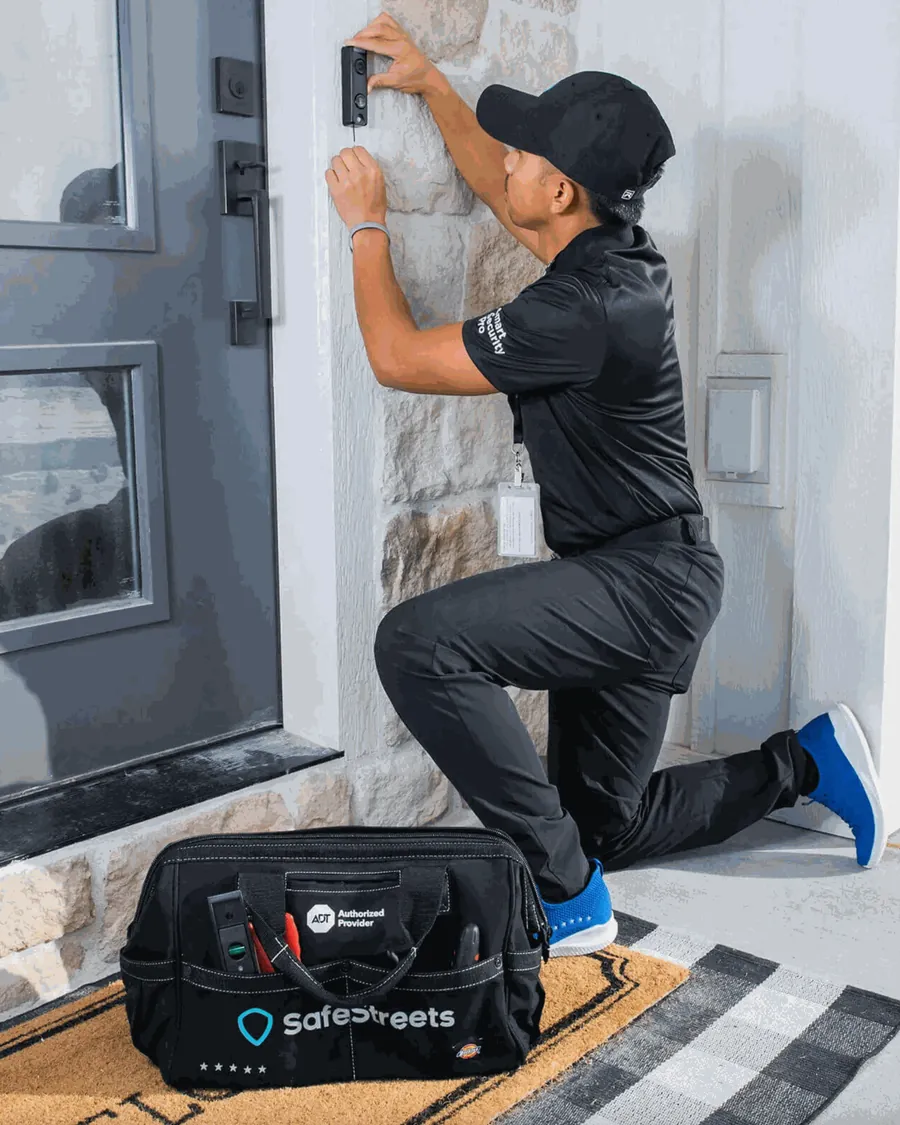
The devices overlap, but they are designed around different views. A useful comparison starts with the area you need to see rather than with the device name.
Best fit: the main entrance. It is designed around close-range activity at the door, such as visitors, deliveries and people approaching the threshold.
Best fit: a wider exterior area. It can cover a driveway, side passage, backyard, garage approach or another area that a doorbell view cannot fully show.
Best fit: homes where close-up entrance visibility and broader approach coverage are both important. The devices can provide different views of the same part of the property.
A doorbell camera is built around the front-door interaction. That makes it useful when your main concern is what happens at the entrance rather than what happens across a larger exterior area.
SafeStreets currently lists a Google video doorbell camera among its home-security camera options. Exact model, features, recording options and package availability should be confirmed in the current quote.
An outdoor camera is more flexible when the important activity happens away from the door itself.
A driveway camera can provide a wider exterior view than a front-door device when the driveway or approach is the area you actually need to monitor.
A side gate, backyard entrance or secondary exterior door may need its own camera view because it sits outside the useful angle of a doorbell camera.
Garage access can create another route toward the home. The right camera location depends on the garage position, lighting, connectivity and the view you want captured.
An outdoor camera is often the better choice when the goal is to see movement across a larger zone rather than interact with someone standing at one doorway.
Sometimes. The question is whether the second device fills a real blind spot or simply duplicates the same view.
For a broader connected-system view, see our smart home security systems guide, which explains how cameras, locks, sensors, app control and professional monitoring can work together.
A good camera in the wrong place can still produce a poor view. Placement, power, connectivity and system setup determine whether the camera actually covers the area you care about.
Start with the entrance or approach you want to see, then confirm that the chosen location provides a useful view without unnecessary blind spots.
The installation method depends on the device and home. A technician can confirm the practical mounting location, power requirements and whether the network connection is suitable.
When cameras are part of a larger home-security system, setup should account for the app, alerts, other security devices and the monitoring plan rather than treating each camera as an isolated gadget.
SafeStreets states that its camera layout can be customized with its security-camera installation professionals and that camera options can be paired with its broader home-security system. For the visit itself, see our professional home security installation guide.
A camera can give you visibility and app notifications. Professional monitoring is a separate part of a monitored security system and relates to how eligible alarm events are handled under the selected plan.
For the difference between app alerts and monitored alarm response, see our monitored home security systems guide.
If cost is part of the decision, compare equipment, installation and monitoring together rather than judging a camera by its standalone price. Our home security cost guide explains those cost categories.
No. Both provide exterior video, but a video doorbell is designed around the doorway and visitor interaction, while an outdoor camera can be positioned to watch a wider exterior area such as a driveway, yard, side passage or garage approach.
Yes. They can complement each other when the doorbell provides the close entrance view and an outdoor camera covers a wider approach or another exterior area. The second device should fill a real coverage gap rather than duplicate the same view.
Not necessarily. Cameras and security sensors perform different jobs. A complete system may use cameras for visibility and sensors for detecting activity at protected entry points or interior areas.
Professional installation can be useful when placement, power, connectivity, integration or testing matter. SafeStreets currently advertises professional security-camera installation as part of its home-security offering. Confirm the equipment and installation scope in the current quote.
SafeStreets currently lists Google video doorbell, outdoor and indoor camera options on its security-camera pages and describes professional camera installation. Exact equipment, compatibility, availability, features and pricing should be confirmed for your address and selected package.
Product availability and provider requirements can change. This guide uses provider-published information for SafeStreets/ADT-specific statements and treats general placement guidance as planning advice rather than a substitute for the current quote or technician assessment.
See how cameras, doorbells, locks, sensors, app control and professional monitoring can fit together before requesting a quote.